
Moonee Valley City Council last voted last week to note the completion of the Moonee Valley City Walking and Cycling Strategy 2012-2022. While the council noted various achievements, there wasn’t much detail provided about what was accomplished and what hasn’t. (See the meeting minutes here, or a recording on YouTube here)
Importantly, Councillor Rose Iser successfully proposed an amendment to evaluate the past strategy, consult with organizations like MooneeBUG, use data to inform planning, and emphasize the importance of active transport.”
A Look Back at Moonee Valley in 2012
Moonee Valley was very different in 2012 when the strategy was envisioned. Escooters didn’t exist, it was 5 years before oBikes would come to Melbourne, and the first Moonee Valley Cycling and Walking Strategy 2004 was still in place (older draft strategies were never adopted).
The Strategy and Its Key Recommendations
The strategy, which spanned over 106 pages, including specific implementation plans, aimed to improve the walking and cycling infrastructure in Moonee Valley. Key recommendations included (among others):
- Renew the Moonee Ponds Creek Shared Path and market it to new users.
- Create a cycling and walking route parallel to the Craigieburn Rail corridor through signage, on-road symbols, and by improving crossings of major roads and allowing two-way bicycle traffic on one-way roads.
- Advocate to VicRoads for full-time on-road separated bicycle lanes on Mount Alexander Road.
- Work with VicRoads to install on-road bicycle facilities on Racecourse Road, Epsom Road, and others.
- Develop a regular audit and maintenance program for shared paths and footpaths.
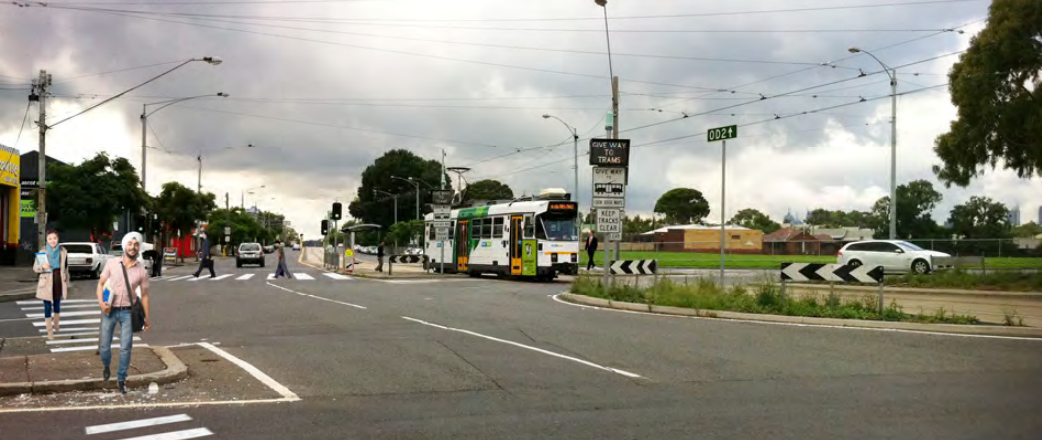
Image: Proposed Zebra crossings at the Epsom Road/Ascot Vale Road Roundabout (Image from the Strategy)
Progress and Challenges
While it is clear that many projects have increased the amenity of shared user paths, in particular, the Moonee Ponds Creek trail, and portions of the Craigieburn Cycling corridor have been built, there are still challenges. The Craigieburn cycling corridor, in particular, is subject to many crossings of state roads, and Moonee Valley still lacks safe arterial cycling routes. The on-road cycling network remains fractured.
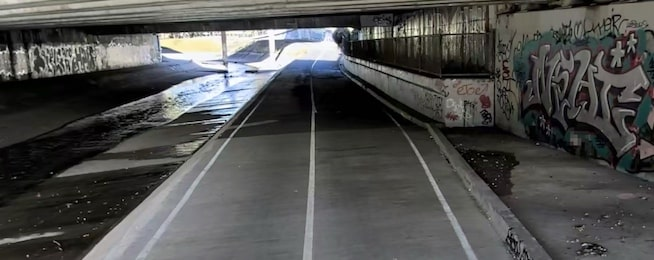
Image: Monee Ponds Creek Trail – Dark underpass that has had lighting installed.
Measuring Success on the Strategy
Measuring the success of the strategy is important, and it would be helpful to have more information on what has been achieved and what still needs to be done. While the council has noted the completion of the strategy, a more detailed report on the progress and challenges would provide a clearer picture of the state of walking and cycling infrastructure in Moonee Valley.
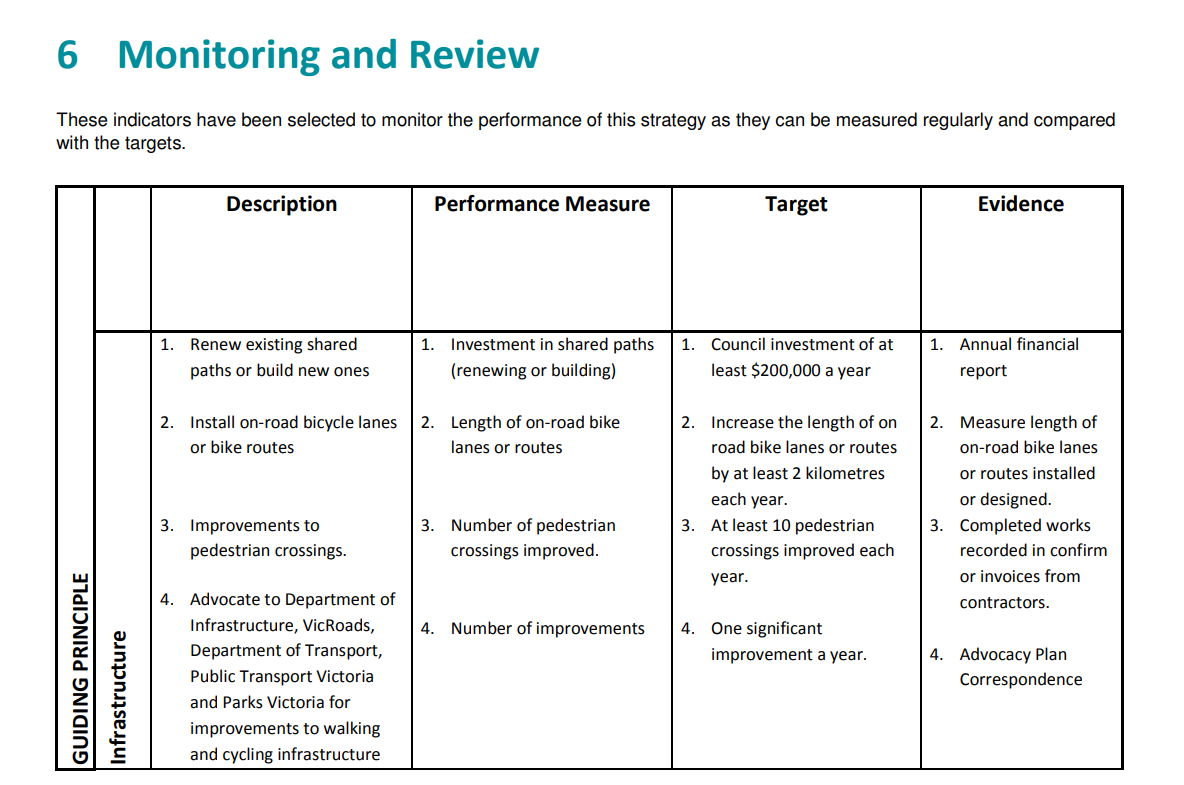
The strategy provided clear metrics for success, such as in the below sample, so it is quite unclear why Council was unable to report on them at the end of the strategy. I hope that it isn’t because they won’t like the answer!
What’s Next?
It appears that instead of another active transport strategy, the council is developing a holistic, 10-year Integrated Transport Strategy for the 2024/25 financial year, which will include public transport, cycling, walking, micromobility, taxis, and of course roads and parking.
There is a real risk that cycling doesn’t get dedicated treatment in this strategy the way it has in the past, however anecdotally the past strategies have not been successful, so combining the transport landscape may result in cycling benefiting from the increased funding and planning as local roads are considered in the same space.
 MooneeBUG
You must be logged in to post a comment.